

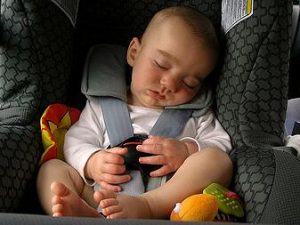
According to the findings of a study that was conducted in 2016, infants who were less than 4 weeks old were at an increased risk of positional asphyxia.
What you need to know about Positional Asphyxia: Even older infants and toddlers, particularly those who have spent more than an hour confined in their car seats, are at risk of developing positional asphyxia. Children will experience breathing difficulties if they are required to remain seated in their car seats for more than an hour. Because of this, medical professionals strongly advise parents to limit any drives to less than 30 minutes in length.
What Is Positional Asphyxia?
Positional asphyxia is a rare cause of sudden infant death syndrome and a difficult diagnosis, as stated by the National Institutes of Health (NIH). When a person’s position prevents them from breathing normally, they will experience this condition. The diagnosis of this condition is primarily determined by the events that led up to it, in addition to specific external and internal findings that are typical of asphyxia (signs of sudden death).
Positional asphyxia causes infants to be unable to breathe because the position in which their bodies are placed blocks their airway. This can take place in a few different ways:
- When something covers the mouth and nose, preventing air from entering or leaving them.
- When a baby’s head is drooped forward, blocking the airway that leads from the mouth and nose to the lungs; or when a baby’s chin is pressing into the baby’s chest, causing the baby to have difficulty breathing.
This condition can affect anyone at any time, but it most frequently manifests in young children when they are deprived of sufficient oxygen for breathing. This is a result of the way in which their body is positioned. Some people believe that this form of asphyxiation occurs when an infant is compressed between two surfaces, which prevents them from breathing properly because their mouth and/or nose are covered. And despite the fact that this is, without a doubt, the reason for some deaths of infants due to positional asphyxia, it is in no way the cause of all of these deaths.
Who is at risk of the dangers of Positional Asphyxia?
Included on the following list of individuals are those who may be at risk for positional asphyxia:
- newborn babies
- infants
- older babies
- toddlers
- adults
Infants who are less than four months old do not have adequate control of their heads and necks. In addition, when their breathing becomes difficult, they are unable to move their heads in any way. And the terrifying reality is that even a slight tilt of their head can cause their tiny airways to become constricted and make breathing difficult for them (for example: when their chin is against their chest). Therefore, it is extremely dangerous for these infants to remain confined in a car seat for extended periods of time.
However, even if you have older babies who are able to remain seated in a car seat for longer periods of time, it is imperative that you do not allow them to continue sleeping in the car seat once you have arrived at your destination. According to the findings of a separate study conducted at the Children’s Hospital Medical Center in Ohio, the most common cause of death for infants in their first year of life is associated with sleep, and the improper use of car seats is a contributing factor.
According to the findings of the researchers, “Car seats should not be used as sleeping areas outside of the vehicle, and children should never be in a car seat with unbuckled or partially buckled straps.” This recommendation was made in light of the fact that children should never be in a car seat with unbuckled straps. This is due to the fact that infants are prone to slouching, which makes it easier for their restraints to restrict their flow of oxygen without the parents being aware that their children are experiencing asphyxiation. A decrease in oxygen levels may result in cognitive or behavioral issues later on in life. When infants are unable to breathe, they pass away very quickly; the process takes just a few minutes.
In what way does it result in death?
Positional asphyxia has also been responsible for the deaths of older infants and toddlers. People have been known to do this when they place car seats on beds or other pieces of furniture and then roll over, suffocating the child who was in the car seat. It has happened that infants and toddlers who were left to sleep in a car seat died because they slumped over and rested their chin on their chest, which prevented or stopped them from breathing. Those who are conscious but are left unattended in a car seat or sling are likely to pass away because their movements can block their nose and mouth, which makes it impossible for them to breathe.
How Can Parents Take Advantage Of The Available Preventive Measures?
Parents need to:
- Sleep in the same room with the baby until they are a year old.
- Use sleepers instead of blankets.
- Put baby to sleep on a flat surface.
- Throw out or return recalled baby items.
- Keep baby away from second and third-hand smoke.
- Put baby to sleep on their back.
- Create a safe space without pillows or blankets if deciding to co-sleep or bed-share.
- Refrain from using drugs and alcohol.
- Vaccinate.
- Don’t leave baby in a car seat or baby rocker for more than an hour
- Once baby falls asleep in car seat or rocker, bring them out
Safety Warnings regarding child safety seats
Be sure that everyone who will be using the car seat goes through training with a child passenger safety technician to learn how to properly install the seat and harness the child. For assistance, one may get in touch with either the state or county health department.
- Loose straps or harness can trap infant’s head or neck; follow manufacturer’s instructions to ensure that the straps are properly adjusted.
- Car seats should only be used in a car or other vehicle.
- Infants in a car seat should be able to be observed by a responsible adult.
- Whenever possible, an adult should ride in the back seat with baby to check baby’s head and neck position and breathing.
- Use only straps to position baby correctly and do not add pillows or blankets.
- Always make sure straps are completely buckled.
- Make sure baby’s chin is up at all times.
positional asphyxia, positional asphyxiation, what is positional asphyxia, signs of positional asphyxiation, signs of positional asphyxia, positional asphyxia signs, what are the specific risks associated with positional asphyxia