

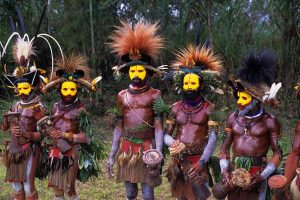
This ritual, which begins when a boy is between the ages of 6 and 10, and is a symbol of a young boy’s rite of passage to manhood, consists of 6 stages and begins when a boy is between those ages.
Meet the Sambia tribe of Papua new guinea where boys drink semen to become men: A custom that is practiced by the Sambia Tribe in Papua New Guinea has the ability to both fascinate and perplex outsiders. We bring you all the information you need to know about them, including the fact that they are the tribe that uses drinking semen to transform boys into men.
This ritual, which begins when a boy is between the ages of 6 and 10, and is a symbol of a young boy’s rite of passage to manhood, consists of 6 stages and begins when a boy is between those ages.
The idea that women pose a threat to men is essential to the rituals that are performed and the lessons that are taught during the first ceremony. In order for these young boys to grow up to be men, and in essence “warriors,” they are instructed on how to emotionally distance themselves from their mothers and the other women in their environment. This is done so that the boys can demonstrate that they are capable of surviving without their mothers and that they are indeed masculine.
There are six stages to becoming a man, and it can take these young men anywhere from ten to fifteen years to complete all of them before they become fathers. A significant portion of the initiation and training is distinguished by aspects that, in the opinion of some, are highly erotic and sexual.
In the beginning stages, a sharp stick of cane is inserted deeply into the young boy’s nostrils until he bleeds profusely. This is the beginning of the caning process. The young boys are also introduced to more experienced warriors, who inform them that older warriors will “copulate” with them in order to accelerate their physical development.
Both the act of having the stick of cane inserted into the nostrils and the performance of ‘fellatio’ are essential components of the process of transitioning from a boy to a man throughout a significant portion of the six stages. The Sambia have a unique comprehension of both the former practice, which is commonly referred to as “inhumane,” and the latter behavior, which is frequently referred to as “homosexual,” despite the fact that both are frequently derided by many as being “inhumane.” Despite this, the Sambia see these two processes as serving different purposes than we do.
Because it obviously causes pain and injury to the body, many of us might consider the practice of inserting the cane stick into the nostrils to be “inhumane.” However, for the Sambia, it is a symbol of strength and his ability to endure pain, which is a necessary quality for a warrior. This is because the Sambia believe that a warrior must be able to endure pain in order to be successful.
In addition, the act of performing fellatio as well as the act of ingesting semen is seen as an integral part of manhood. This is due to the fact that boys are unable to mature into men unless they ingest semen, and they adhere to the notion that all men have “eaten the penis.” Additionally, the act of performing fellatio is seen as an integral part of manhood.
The Sambia believe that a man’s sperm contains the ‘masculine spirit,’ and that young boys will be able to achieve this state of being if they consume sperm from an adult male.
The ways in which we respond to such behaviors are significantly influenced by our varying cultural backgrounds. What one culture considers to be homosexuality might be regarded as merely a rite of passage in another culture. The path to “manhood” does not follow a predetermined course, but the destination is always the same: to be able to protect and provide for others.
sambia tribe of papua new guinea, samba tribesmen, samba tribe, sambia tribe, sambia tribe rite of passage, sambia tribe papua new guinea, new guinea men