

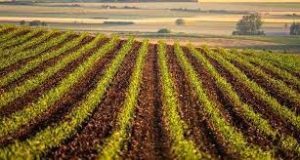
These days practically all landowners utilize a few strategies for arable cultivating on the grounds that they realize legitimate soil care contributes incredibly to a decent gather by the day’s end. Like any innovation, arable farming enjoys benefits and detriments which we will examine in this article to help ranchers whether or not their territory ought to be ploughed.
Numerous grounds-keepers realize that land can be furrowed utilizing different gadgets, just as it was done in the good ‘ol days of utilizing a digging tool. Normally, every one of these strategies accompany benefits and impediments. For instance, on the off chance that you burrow a ground with a digging tool, the prolific layer won’t be harmed simultaneously, yet this strategy is very shallow, wasteful and tedious. It is an entirely appropriate strategy for tiny packages of land.
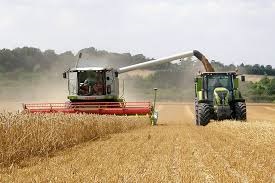
Nowadays, soil can likewise be treated with present day rural hardware. Furrowing with engine procedure is exceptionally successful assuming you are chipping away at an enormous region. Perhaps the greatest benefit of utilizing this technique is the way that the dirt gets uncovered to around 25cm. Simultaneously, culturing is performed inside a lot more limited time, along these lines limiting the utilization of actual work, which is additionally vital in warm periods when the drying rate of the dirt is incredible and speed is significant.
Features of Arable farming
Many ranchers quarrel over the benefits and disservices of furrowing, failing to remember that by and large its impact relies upon how ably you adhere to the normal directions.
What conditions make it important to furrow your territory? This relies fundamentally upon the area of your ranch; area decides temperature and other climate conditions, nonetheless, the best an ideal opportunity for furrowing is subsequent to collecting. The people who routinely furrow their territories realize that this training assists with disposing of destructive plants; this can be limited to one time each year.
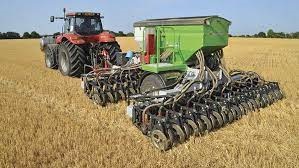
It is a lot more straightforward to handle your dirt a few times per year than to go to the nursery consistently to fight with weed. It merits recalling that inappropriate furrowing is laden with adverse results like the earth solidifying in the wake of drying. Furrowing in sweltering climate will unfavorably influence the nature of the land, since dampness will rapidly dissipate, consequently decreasing the germination of yields.
The depth of ploughing not entirely settled by the sort of harvests you mean to plant; it is smarter to plough the land depth for root yields, and shallow for oats. The expense of furrowing with the assistance of a farm not entirely settled by the size and arrangement of the plot, just as the machinery utilized.
Pros of arable farming
There is a prominent attitude among novice landscapers that land shouldn’t be furrowed in light of the fact that it can adapt to immersion, oxygen and different issues. This is only a fantasy on the grounds that even our precursors who began furrowing their properties quite a long time back understood that this will prompt increase in the yield of the land. Assuming you were to just let the land be, this will just prompt an increase in the yield of weeds.
Allies of ploughing are of the assessment that to acquire great harvests, it is important to furrow or burrow the dirt to a profundity of 18-23 cm and develop the land prior to planting. When furrowing is profound, the top layer of soil goes down and the base layer rotates toward the sky. Soil development with the assistance of horticultural hardware enjoys the accompanying benefits:
A bigger volume of land can be furrowed inside a more limited time.
Soil enhancement with oxygen. The chance of profound handling, which permits turning of the dirt layer.
Expansion in efficiency.
Decrease of work expenses and human endeavors.
The capacity to play out a few activities all the while; for instance, furrowing and treatment. Manures are applied for additional improvement of nature of the land during the ploughing system.
Ploughing with a processing shaper is completed to give the dirt detachment prior to planting.
Ploughing makes wrinkles to amass dampness and silt. The remainders of developed plants and weeds are installed at a profundity of 15-18 cm and don’t obstruct the development of yields.
Roots (rhizomes) of enduring weeds are cut at incredible profundity, which keeps them from jumping up once more. At the point when lower layers are turned up, hatchlings and eggs of vermin are likewise conveyed upwards to be eaten by birds or die from moistness, dryness or infection.
Cons of arable farming
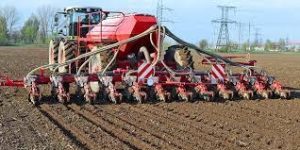
Despite the colossal number of benefits of involving agrarian hardware for furrowing the land, it ought not be applied in all cases since automated furrowing requires further handling.
Also, furrowing in a site congested with weeds can demolish the circumstance, since seeds of weed and nuisances can get spread simultaneously. This interaction could likewise prompt ensuing exhaustion of the dirts if the fruitful layer (humus) isn’t reestablished as expected, and its sum decays because of expanded mineralization. At the point when this occurs, yield diminishes extensively; the most over the top horrendous impact of this is that, the ripe layer will be too frail to even think about holding the foundations of plants, and the harvests will continuously move floored by wind or washed off by water. No-furrowing innovation is utilized by numerous cutting edge ranchers. They contend that without composts and farm hauler it is still very conceivable to accomplish great collect if a good temperature-dampness primary system is made in the dirt, and the earth is handled to a profundity of not in excess of 5 cm.
The refusal to plough land is not a new fad amongst farmers. In the last decade many countries have significantly reduced the production of ploughs or completely abandoned them, and switched to a no-ploughing cultivation system with minimum surface treatment to a depth of 5-7 cm, totally getting rid of mechanical tillage. Now in the USA there is 113700 thousand hectares of cultivated land. The no-ploughing method of farming is used on 23700 thousand hectares, which is almost 21% of the total area. In Canada, there is 23500 thousand hectares of cultivated land, of which 13400 thousand hectares are handled without a plough. This is as much as 57% of the cultivated land. A similar situation is observed in Latin America, the leading producer of agricultural crops. In Argentina, there are 29000 thousand hectares of total cultivated area and non-ploughing method is used on 16000 thousand hectares, totaling 55% of the total area. In Brazil, out of their 38400 thousand hectares, 21900 hectares under no-ploughing processing, which is 57% of the total area. In Paraguay, almost 70% of cultivated land is not ploughed.
But remember that blindly copying even the most magnificent technologies is unreasonable. It is always necessary to carefully analyze specific soil-relief and climatic conditions before building a corresponding system of land use. No-ploughing farming produces excellent results in arid areas when growing cereals right from the first year, but it is not possible to grow root crops on clayey wet soils using this method. It will be necessary to first improve the soil for several years, prepare it and then plant the crop. So, no-ploughing helps to preserve the fertile layer of the soil, but you need to apply this method only after considering the type of soil you have and what you want to grow. Every advantage and disadvantage is extremely important. Consider all the important factors before choosing your soil care technology; this will help you get better harvest for over a longer period. Good luck!