

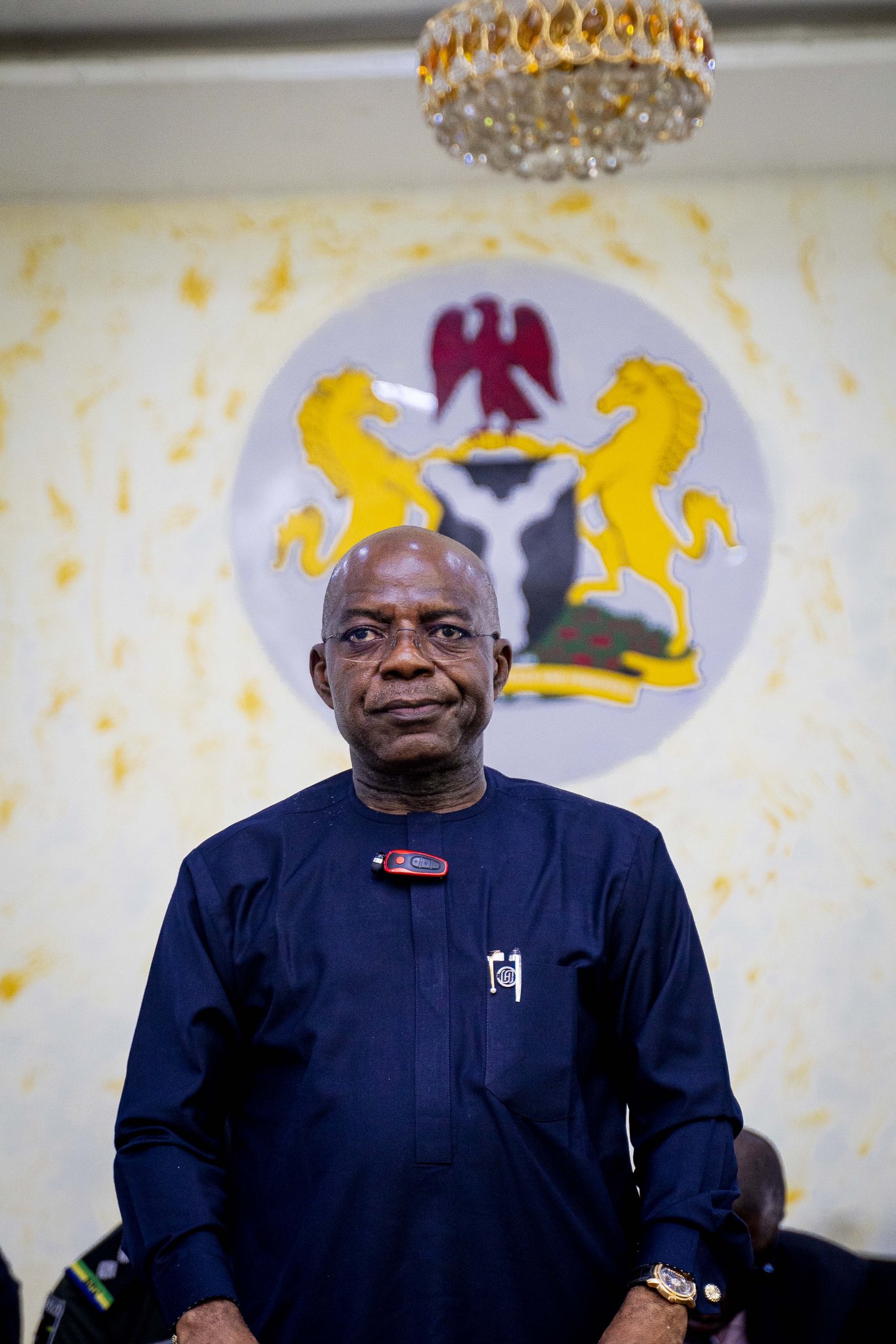
In a scene that mixed relief, gratitude and political momentum, the Governor today announced a concrete step to right a long-standing injustice: by the end of this month his administration will begin paying the long-overdue salaries and entitlements owed former elected councillors who served between 1999 and 2023. The payments, he said, will be made in batches — a practical, considered approach to settling liabilities accumulated under past administrations.
The pledge came at a packed meeting at the JAAC Secretariat Umuahia, where more than a thousand members of the Association of Elected Former Councillors of Abia State gathered to hear directly from the executive. The Association was led by its State Coordinator, Hon. Tony Agbanyim, whose measured but impassioned speech laid bare the human cost of years without pay — lives interrupted, families strained, and more than eighty members lost to avoidable hardship.
Addressing the crowd, the Governor framed the move not as politics but as stewardship: the obligation of leadership to solve problems and to do what is right, irrespective of party labels. “Whether you are a member of my party or you are not, you will be treated fairly and equally,” he told the attendees, reiterating that the decision to clear arrears arose from a moral duty rather than from political calculation. He also explained the administration’s plan to harmonise outstanding court matters, asking that all cases be presented so that the state could deal with every claim comprehensively.
That spirit of reconciliation carried through the meeting. The Governor thanked those who had pursued justice in court for withdrawing their suits once the state stepped in to resolve the backlog — a move he said helped build confidence between citizens and government. He emphasised that resolving these arrears was about restoring dignity to those who served at the grassroots and about recognizing the sacrifices they made in building the state.
Goodwill remarks from across the political and legislative spectrum underscored broad support for the gesture. The National Secretary of the Labour Party, Senator Darlington Nwokocha, alongside federal and state lawmakers — including Hon. Ginger Onwusibe and Rt. Hon. Augustine Nmeregini — praised the Governor’s pledge and encouraged the former councillors to back a leader they described as consistent and dependable. “His yes is yes and no is no,” they declared, signaling political confidence that dovetailed with the humanitarian impulse behind the payments.
Local government leaders at the event also voiced their appreciation. In a thoughtful welcome, the Commissioner for Local Government and Chieftaincy Affairs, Prince Uzor Nwachukwu, lamented how successive administrations had denied councillors their rights and credited the current government with changing the narrative — repairing roads, fixing schools and healthcare points, and now, restoring livelihoods.
The Association formalized its gratitude and political endorsement in a single, dramatic motion: it passed a vote of confidence and unanimously adopted the Governor as its sole governorship candidate for 2027 — a powerful show of grassroots affirmation moved by Barr. Geoffrey Ike (Nwateacher) and seconded by Chief Ndukwe Oju Uka. Regional coordinators — Hon. Cletus Nwankwo, Hon. Okey Onukafor and Chief Francis Nwanguma — spoke in one voice about a leader who “understands Abia language”: paying arrears, repairing roads, and fixing education and health facilities.
For many former councillors, the moment was cathartic. Their coordinator described how, after years of being sidelined while governors invested in flashy projects, people at the grassroots had been left to fend for themselves. The Governor’s instruction to recast personnel verification (PV) records and prepare missing PVs, the coordinator said, had already rekindled hope and restored a sense of belonging.
This episode is more than an administrative clean-up; it is political theatre with a humane centre. It tells the story of a governor who casts the duties of office as stewardship — who measures success not only in new projects but in closing old injustices. Whether the payments will translate into votes in 2027, the immediate human outcome is clear: men and women who gave years of service to their communities will finally see the state answer to its obligations. For a state eager for practical, people-centred governance, that answer — for now — is Dr Alex Otti.