

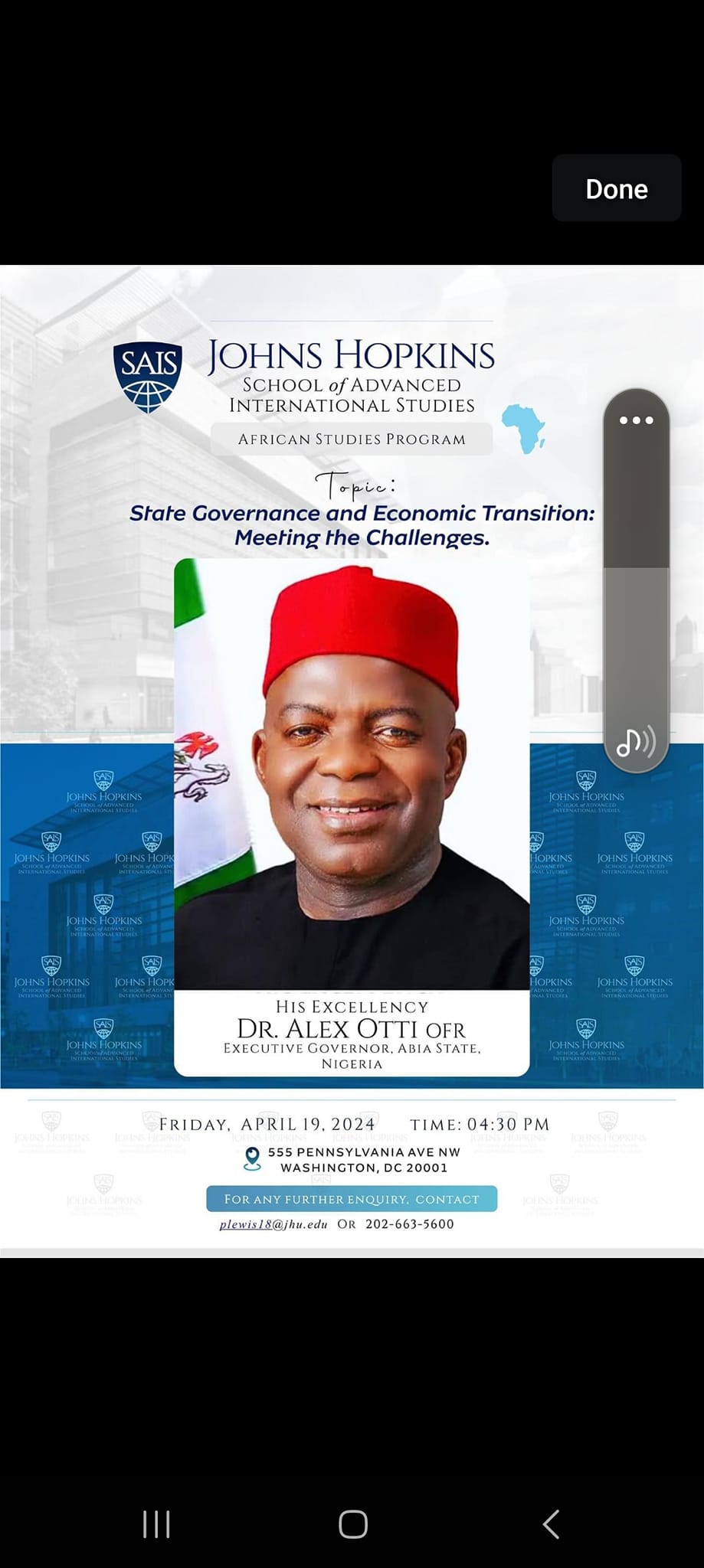
Governor Alex C. Otti’s Lecture at the Johns Hopkins School of Advanced International Studies in the United States sparked a profound reevaluation of Nigeria’s economic landscape and the imperative of transitioning from dependence to independence. With an astute understanding of the pitfalls of the current “feeding bottle” system, Otti articulated a roadmap for fostering economic viability and autonomy among Nigeria’s states.
At the core of Otti’s discourse was the indispensable role of citizen engagement in driving meaningful change. He underscored the importance of citizens actively participating in the electoral process, from scrutinizing candidates at party primaries to holding elected officials accountable. By placing citizens at the center of the change process, Otti advocated for a shift towards a more inclusive and responsive governance framework.
Central to Otti’s vision was the notion of accountability as a catalyst for change. Holding leaders accountable, he argued, is instrumental in ensuring that resources are allocated judiciously and in alignment with the needs of society. Moreover, by fostering transparency and accountability, states can garner the support of development partners and private investors, thereby unlocking their full economic potential.
Otti’s critique of Nigeria’s current system highlighted its inherent flaws and the detrimental impact of overreliance on central government resources. He lamented the abandonment of state-level resources, which has perpetuated unemployment and poverty, while a select few in Abuja reap the benefits. By illuminating these systemic deficiencies, Otti called for a paradigm shift towards a more decentralized and equitable distribution of resources.
Despite the challenges, Otti remained optimistic about Nigeria’s potential for greatness. He emphasized that meaningful change hinges on the collective effort of all stakeholders and the dissemination of public enlightenment. By raising awareness of structural inequities and fostering a consensus for reform, Otti envisioned a path towards a more prosperous and inclusive Nigeria.
Drawing on his deep understanding of Abia State and his extensive leadership experience, Otti demonstrated the importance of meticulous preparation in senior leadership positions. Leveraging his insights from national publications and his tenure in both the public and private sectors, Otti exemplified the qualities of a visionary leader committed to driving positive change.
In conclusion, Governor Alex C. Otti’s lecture at the Johns Hopkins School of Advanced International Studies served as a clarion call for Nigeria to break free from the shackles of economic dependence and chart a course towards self-sufficiency. By empowering citizens, promoting accountability, and fostering public enlightenment, Otti offered a blueprint for realizing Nigeria’s immense potential and securing a brighter future for generations to come.
Dr. Charles Chinekezi is a Professional Journalist and Chartered Management Professor (C.M.P.).