

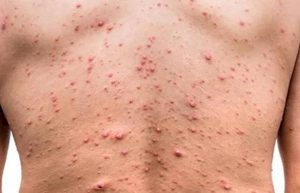
More than 1,000 confirmed cases of monkeypox have been reported to the World Health Organization (WHO) from 29 countries that are not endemic for the virus.
WHO Director-General Tedros Ghebreyesus made this claim during a live press conference shown on the world health body’s social media.
Mr. Ghebreyesus further revealed that the latest infections reported by countries have been discovered not only among men who have sex with men. He said that some countries are now beginning to report cases of community transmission, including some cases in women.
The WHO Director-General also noted that the monkeypox virus has been circulating and killing in Africa for decades with 1,400 suspected cases and 66 deaths reported so far.
“It is an unfortunate reflection of the world we live in that the international community is only now paying attention to monkeypox because it has appeared in high-income countries.
“Communities living with the threat of this virus every day deserve the same concern, the same care and the same access to tools to protect themselves,” he said, calling for more medical care in African countries endemic for the virus.
According to the breakdown of cases available on the WHO website, for non-endemic countries as of May 29, 2022, the UK led the record for infections with more than 100 cases, followed by Portugal and Canada.
Meanwhile, a separate record for Africa indicates that the Democratic Republic of the Congo topped the table with 1,284 infections and 58 deaths between January 1 and May 8, 2022, followed by Nigeria and Cameroon.
Preventive measures, vaccination.
Speaking about measures to curb the spread of the virus, the director-general said the WHO will issue guidance on clinical care, infection prevention and control, vaccination and further guidance on community protection.
“Last week, WHO organized a consultation with more than 500 researchers to review what we know and don’t know and identify research priorities.
“We are also working with UN AIDS, civil society organizations and communities of men who have sex with men to listen to their questions and provide information on what monkeypox is and how to avoid it,” he said.
He also highlighted the various ways that people can protect themselves from contracting the virus.
“There are effective ways for people to protect themselves and others. People with symptoms should self-isolate at home and consult a health worker.
“Those who share a home with an infected person should avoid close contact,” he said.
On vaccination, he added that the supply of approved anti-virus and monkeypox vaccines is limited, noting that the WHO is developing a coordination mechanism for supply distribution based on public health needs and equity.
He also warned that the WHO does not recommend mass vaccination against monkeypox, as available vaccines are being used to protect those who may be exposed such as health workers and laboratory personnel.
In an explanatory on the WHO website, it has been shown through several observational studies that smallpox vaccination is about 85 percent effective in preventing monkeypox.
On how monkeypox is related to smallpox, the WHO explained that the clinical presentation of monkeypox resembles that of smallpox.
Smallpox was more easily transmitted and more often deadly, with around 30 percent of patients dying, while the last case of naturally acquired smallpox occurred in 1977.
Origin, monkeypox clades
According to the WHO’s technical lead for monkeypox, Rosamund Lewis, the virus has been present in Africa for 50 years.
He explained that it was first described in 1970 in a nine-month-old child.
“Before that, it was first discovered in a research monkey colony in Copenhagen, Denmark, which is the origin of the name, so it is a virus that is present in forested regions.
“There are events in which the virus passes from animals to people, there are activities that invade the forest, there is deforestation, perhaps there is population pressure and demographics,” he said.
On the clades of monkeypox, Ms. Lewis reiterated in the briefing that there are two different strains or clades of the virus that are prevalent in different areas.
The clades are the Central African region called the Congo Basin clade and the second is the West African region called the West African clade.
The WHO expert noted that it has long been known that the spreading clade, which is the West African virus clade, may cause less severe disease.
She said: “So the one we are seeing spreading in non-endemic countries is a strain that has been known for a long time to perhaps cause less severe disease.
“And when there is less serious illness, people don’t need to stay home.
“So it’s possible that transmission is increased through increased human contact, physical contact, regardless of the nature of the virus itself.”
SEE: Governor Yahaya Bello’s roadmap to Hope 2023